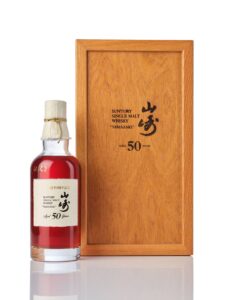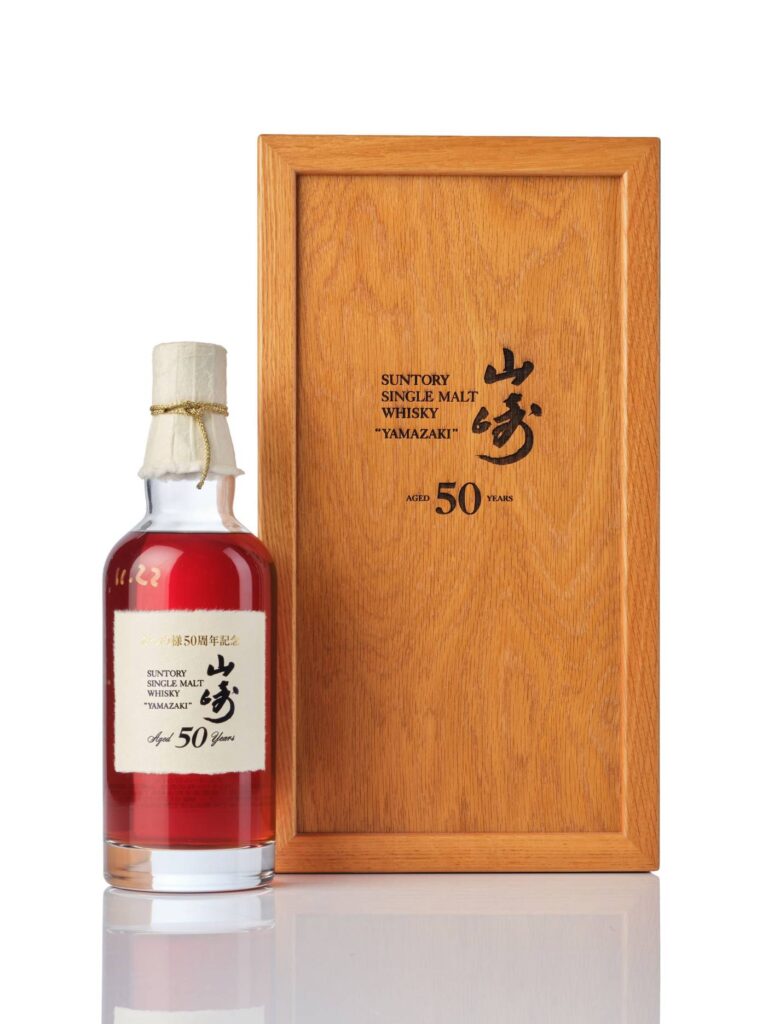
Picture 1: The bottle of Yamazaki 50 Year Old Club Natsume that everyone is talking about because of its bidding price.
Therecent auction sale of a 700 ml bottle of Yamazaki 50 Year Old Club Natsume for the equivalent of US$842,169 has attracted the attention not only of Japanese whisky enthusiasts, but also of observers of the collectibles market and alternative investments.
At first glance, such a figure for a single bottle of whisky—however exceptional—may seem extraordinary or even irrational. In reality, for those who have followed the rare and ultra-rare whisky market for many years, this is anything but an unusual phenomenon.
Whenever an iconic bottle reaches or surpasses significant psychological price thresholds, headlines tend to portray the event as exceptional. Yet these record-breaking sales are simply the most visible manifestation of market dynamics that have been shaping whisky investment for decades. At the heart of these dynamics lies one fundamental concept: scarcity.
The Concept of Scarcity
The term rarity is often used to describe a prestigious limited-edition bottle produced in only a few hundred or a few thousand examples worldwide. However, the real force behind the most significant long-term appreciation is the transformation of initial rarity into actual scarcity.
A distillery may decide to release a limited edition of only a few hundred bottles. At that point, the whisky is undoubtedly rare, but not necessarily scarce. Every bottle still exists, remains potentially available, and the market has a relatively accurate understanding of the total supply.
Over time, however, the situation changes dramatically.
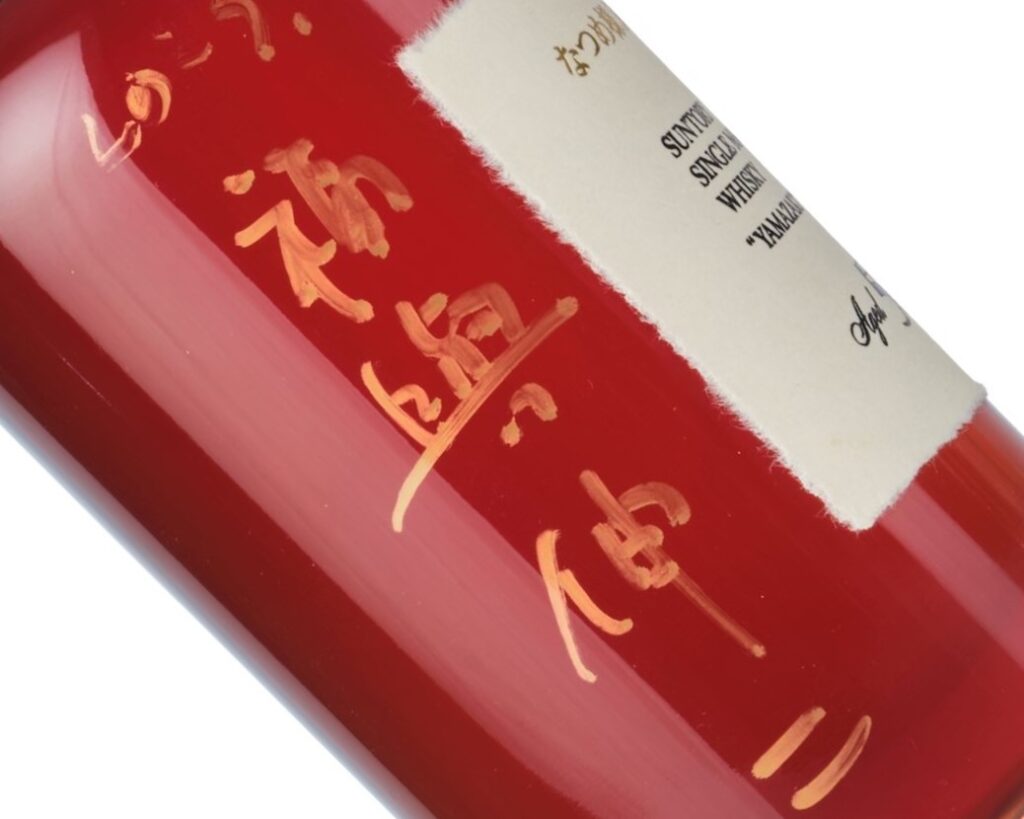
Picture 2: The signature of Chief Blender Shinji Fukuyo on the bottle is a distinctive mark of authenticity and uniqueness
Time Inevitably Reduces Availability
Some bottles are opened and consumed. This is the natural fate of an exceptional spirit whose quality encourages its fortunate owners to enjoy it. Every bottle that is opened permanently reduces the number of surviving examples.
Unlike many other collectibles, a bottle of whisky that has been consumed cannot be restored, reconstructed or replaced. Once it is gone, it disappears from the market forever.
This process creates a remarkably simple yet powerful effect: the more time passes, the fewer bottles survive. Those that remain become increasingly scarce, and this growing scarcity is often reflected in their market value.
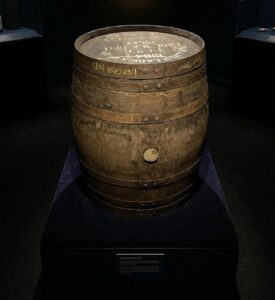
In the case of legendary expressions such as Yamazaki 50 Year Old, this phenomenon is amplified by several additional factors. Production volumes were extraordinarily limited from the outset, while the prestige of the distillery and the international rise of Japanese whisky have generated ever-growing global demand.
The Unavailability of Bottles Held in Major Private Collections
Consumption is only one cause of scarcity.
There is another, less visible but equally important phenomenon: the long-term immobilisation of bottles within private collections and family wealth.
Many of the world’s finest bottles are acquired by collectors who have no intention of selling them in the foreseeable future. Some remain stored for decades within private collections, family trusts or inherited estates.
From a practical market perspective, these bottles cease to form part of the available supply.
Although they physically still exist, they have effectively become unobtainable. When a substantial proportion of the surviving bottles is concentrated in stable private collections, the number of bottles genuinely available for purchase declines dramatically.
This is precisely when scarcity reaches levels capable of producing valuations that may appear astonishing.
Major international auctions repeatedly demonstrate this dynamic. Record prices are rarely the result of temporary market hype. Rather, they arise from the meeting of exceptionally strong global demand with an extremely limited available supply.
When an iconic bottle returns to the market after many years of absence, buyers understand that another comparable opportunity may not arise for a very long time.
This combination of factors distinguishes the ultra-rare whisky market from many other collectible sectors. Supply is not merely fixed—it continuously declines over time.
Each passing year further reduces the number of surviving bottles, while the historical prestige of certain labels often continues to strengthen.

Picture 3: It is the integrity of every detail that distinguishes a rare bottle from a genuine investment-grade asset.
For this reason, the near-million-dollar sale of a Yamazaki 50 Year Old should not be viewed as an isolated or extraordinary event. Rather, it confirms the long-established market mechanisms that have characterised the highest tier of whisky collecting for decades.
When bottles appreciate from a few thousand dollars to several hundred thousand—or even approach the million-dollar mark—the decisive factor is rarely the intrinsic quality of the spirit alone.
Quality is the starting point.
What transforms certain whiskies into genuine stores of wealth is the combination of their initial rarity, the progressive disappearance of surviving bottles through consumption, their concentration within long-term private collections, and sustained international demand from collectors, specialised investors, alternative investment funds, and even major investment banks with dedicated alternative asset divisions.
The Rarer the Whisky, the Greater the Competition to Acquire It
In other words, the value of these bottles does not increase simply because they are rare.
It increases because they become progressively more difficult to acquire while attracting growing interest from an increasingly broad spectrum of market participants—including private collectors, corporate investors and, on occasion, even institutional investors.
It is this evolution—from rarity to true scarcity—that continues to represent one of the most powerful drivers of appreciation in the rare and ultra-rare whisky market.
The Yamazaki 50 Year Old bottle that sold for almost one million dollars is therefore not a market anomaly.
It is a compelling demonstration of how time can transform an exceptional whisky into an asset that is, for all practical purposes, irreplaceable.